St Thomas More
Catholic Primary School
R.E.
RE Overview
Religious Education Curriculum Statement
Intent
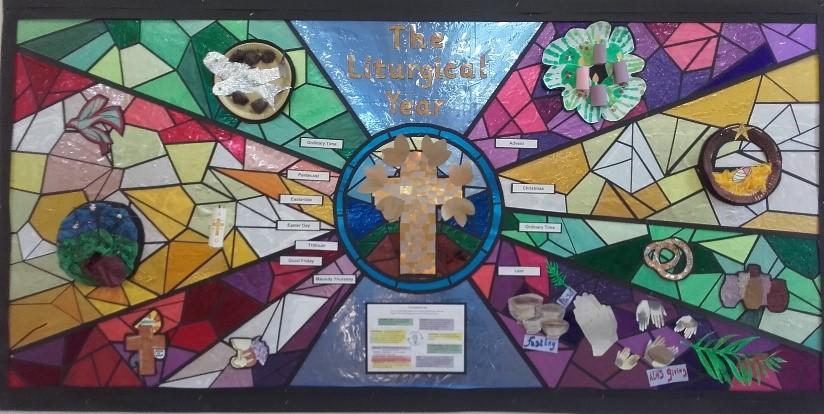
The Religious Education (RE) curriculum at St. Thomas More Catholic Primary School is in line with the Guidance provided by the RE Curriculum Directory of the Clifton Diocese and is based on the planning materials from Arundel and Brighton. The teachings of the faith are based around the Catholic Church’s Liturgical year and split into six branches. The pupils revisit the branches on a yearly basis. Lessons are designed for pupils to gain ‘knowledge and understanding about stories, scriptures, special people and beliefs, signs, symbols and religious terms’. More importantly, the lessons ask pupils what can they learn and understand from this knowledge and how they or others can apply this in their lives. As they progress through the school, older pupils begin to analyse these views.
In addition, we ensure the whole Religious Education curriculum is taught in the light of the Gospel values and actively promotes the spiritual and moral development of our pupils.
Through Religious Education we aim to:
- help pupils to grow in confidence in God’s love;
- continue to develop their sense of awe, wonder and reverence in the world around them;
- develop within children a reverence for God and all things of God;
- help children in their search for the meaning of life through the way in which God reveals himself in Christ, developing an understanding of the Gospel;
- give RE equal status to that given to all core subjects in the curriculum;
- put God, and therefore religious education, at the heart of the life of the school;
- teach RE in accordance with the teachings of the Catholic Church;
- provide opportunities for children to celebrate their faith through liturgy, sacrament and prayer;
- develop a respect for each other and all people, including those of different faith and cultural backgrounds;
- contribute to the child’s understanding of morality, choice and responsibility for their present, youth and adult life;
- foster in all the understanding of God’s Kingdom through work in our local and wider community;
- ensure the liturgical year is reflected in the life and activities of the school;
- develop an understanding of other world faiths;
- strengthen the relationship between home, parish and feeder schools;
- provide adequate resources in terms of both personnel and materials required to implement the policy;
- provide in-service training for teachers so that they have opportunities to deepen their own faith.
Section 48 report
Scripture Trees


Take a look at some of our fantastic RE learning:
Mr Comer from St Thomas More Church came to speak to Year 4 all about how the Church follows in Jesus' footsteps.


Hot-seating Zachariah in Year 2


Year 3 - Preparing for the arrival of Jesus


Year 4 have represented the generations of Jesus' family in a Jesse tree


Year 2 have used artwork to represent God's gift of creation


Year 2 have been learning about baptism.


Year 5 - Baptism of Jesus


Year 5 looked at the symbolism in different pieces of artwork depicting the baptism of Jesus. They looked to see if the Holy Trinity were represented and looked at the accuracy of the artwork, linking to the scripture - Matthew 3:13-17


